0

vSphere Data Protection 6.1 Part1

dtechinspiration-vdp-components


dtechinspiration-vdp-what

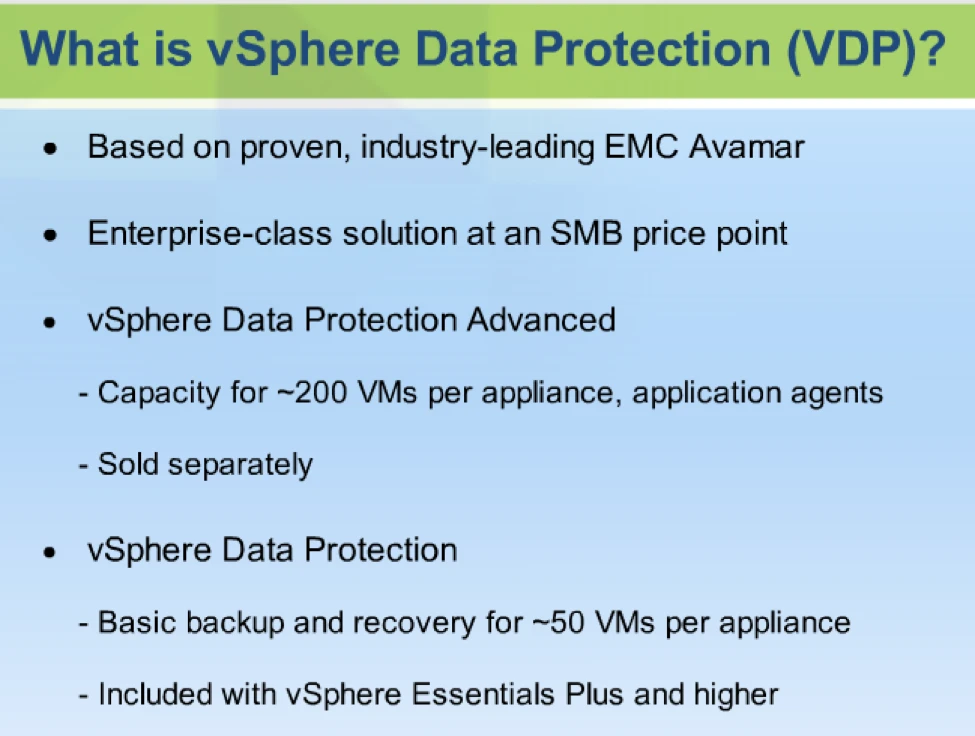
  1. VDP is fully integrated with vSphere webclient so it is very easy for vsphere admin.
  2. From this single console vsphere admin will be able to create backup job and able to restore, rather than investing time to learn new user interface.
  3. At the first time VM is backed up all the block which makeup VM will be backed up. After that only change block will be copied (CBT) is used.
  4. Variable length segment de-duplication is more efficient than Fixed segment length de-duplication. Other backup solution use fixed length deduplication.
  5. Without agent you are able to restore backup so it remove complexity
  6. It is also possible to restore individual file and folder you can restore rather than restoring whole VM using just a web browser.
  7. If you want to take backup for Database then you can install agent for that application and backup is possible for the same. Example: Microsoft SQL database, Microsoft Exchange.

Features:

  1. You can replicate the backup between VDP advanced appliances
  2. You can replicate backup from VDP advanced to EMC Avamar.
  3. You can also move data to offsite by using VDP
  4. Replication is very efficient to minimize Network bandwidth utilization.
  5. Relication is encrypted for security purpose.

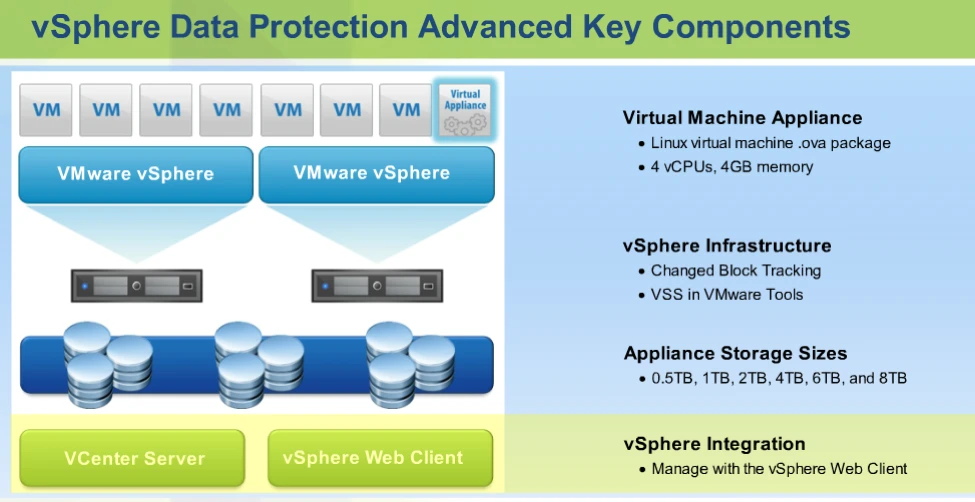
Let’s see vSphere Data Protection Components.
dtechinspiration-vdp-components

  1. Virtual Machine Appliance: As shown in above Image.
  2. vSphere Infrastructure: VMware vsphere API or VADP is used vsphere data protector advanced. This include the change block tracing or CBT mechanism. CBT track the changes made to a VM at the block level and provides this information to VDP so that the only change block will be backedup. This significantly reduce the storage consumptions and speeds up the backup and restore time VDPA.

** VMware tool contain VSS on windows OS it will quiseing the application while backing up the windows OS.

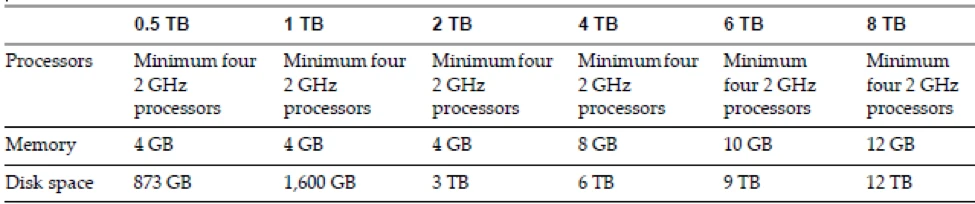
3. Appliance Sizes:

OVA SizeDisk Space Required
0.5 TB850 GB
1 TB (1.57 TB)
2 TB (3.02 TB)
  • In VDP 5.5 one OVA size is available, you will be prompted to choose the size of your deduplication store during configuration.
  • When a VDP appliance is deployed, additional space cannot be added to an existing appliance. If more destination datastore capacity is needed, a new VDP appliance can be deployed (up to 10 appliances can be deployed per vCenter Server).
  • When sizing a datastore to house a VDP appliance, consider if the virtual machine swap file will also reside here and allocate sufficient space.

Note: You must use Web client for managing VDP. You can’t use VI client

You can install VDP in

  1. 2 TB
  2. 4 TB
  3. 6 TB
  4. 8 TB

But consumed amount is 50% higher than actual amount of VDP.

  1. 2 TB —  3 TB Storage – 6 GB RAM ( +2 GB with every 2 TB storage)
  2. 4 TB —  6 TB Storage – 8 GB RAM
  3. 6 TB —  9 TB Storage – 10 GB RAM
  4. 8 TB —  12 TB Storage – 12 GB RAM

You can do Thin provisioning but admin need to monitor the storage.

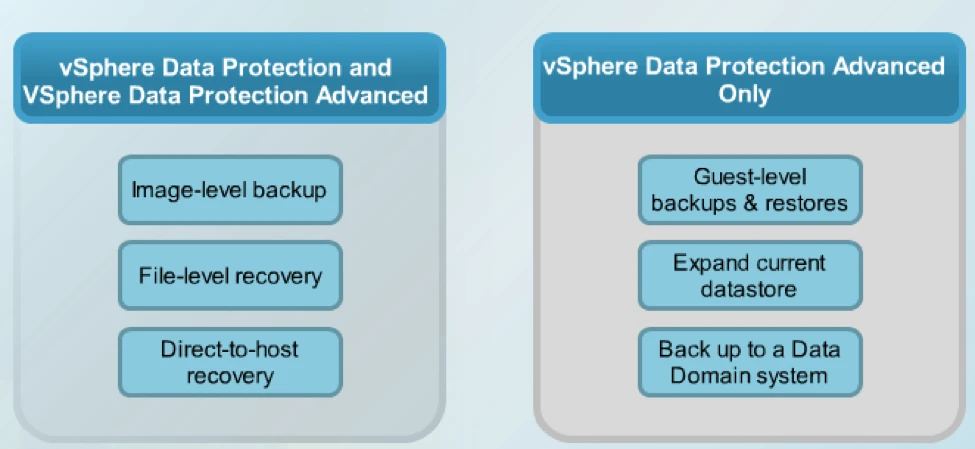
You can upgrade VDP to VDAP (advance) but you can’t downgrade.

VDAP – SLES 11 ( suse linux entprise server) 64 bit.

vCenter 5.1 or higher is supported
dtechinspiration-vdp-advancedvsbasic

0

How to install vSphere Data Protection 6.1

dtechinspiration-VDP-installation

Before going to start installation let’s see Prerequisites.

Software Requirements

VDP 6.1 requires the following software:

  1. vCenter server 5.5 or later
  2. VDP 6.1 supports the Linux-based vCenter server virtual appliance and the Windows-based vCenter server.
  3. vSphere web client
  4. Web browsers must be enabled with Adobe Flash Player 11.3 or later to access the vSphere web client and VDP functionality.
  5. vSphere host 5.0 or later

** Unsupported Disk Types

When planning for backups, make sure the disks are supported by VDP. Currently, VDP does not support the following virtual hardware disk types:

a. Independent

b. RDM Independent – Virtual Compatibility Mode

c. RDM Physical Compatibility Mode

** Unsupported Virtual Volumes

The VDP appliance version 6.1 does not support backups and restores of virtual machines on Virtual Volumes (VVOLs).

VDP System Requirements

dtechinspiration-VDP-sys-req


Best Practices for VDP deployment:

  1. Deploy the VDP appliance on shared VMFS5 or later to avoid block size limitations.
  2. Make sure that all virtual machines are running hardware version 7 or later to support Change Block Tracking (CBT).
  3. Install VMware Tools on each virtual machine that VDP will back up. VMware Tools add additional backup capability that quiesces certain processes on the guest OS before the backup.
  4. VMware Tools are also required for some features used in File Level Restore.
  5. When configuring the network for the VDP appliance and the vCenter, do not modify network address information by using NAT or other configuration methods (firewall, IDS, or TSNR). When these unsupported methods are deployed as part of the virtual network, some VDP functionality may not work as designed.

Now Let’s see VDP installation steps:

  1. First download the VDP from VMware website.
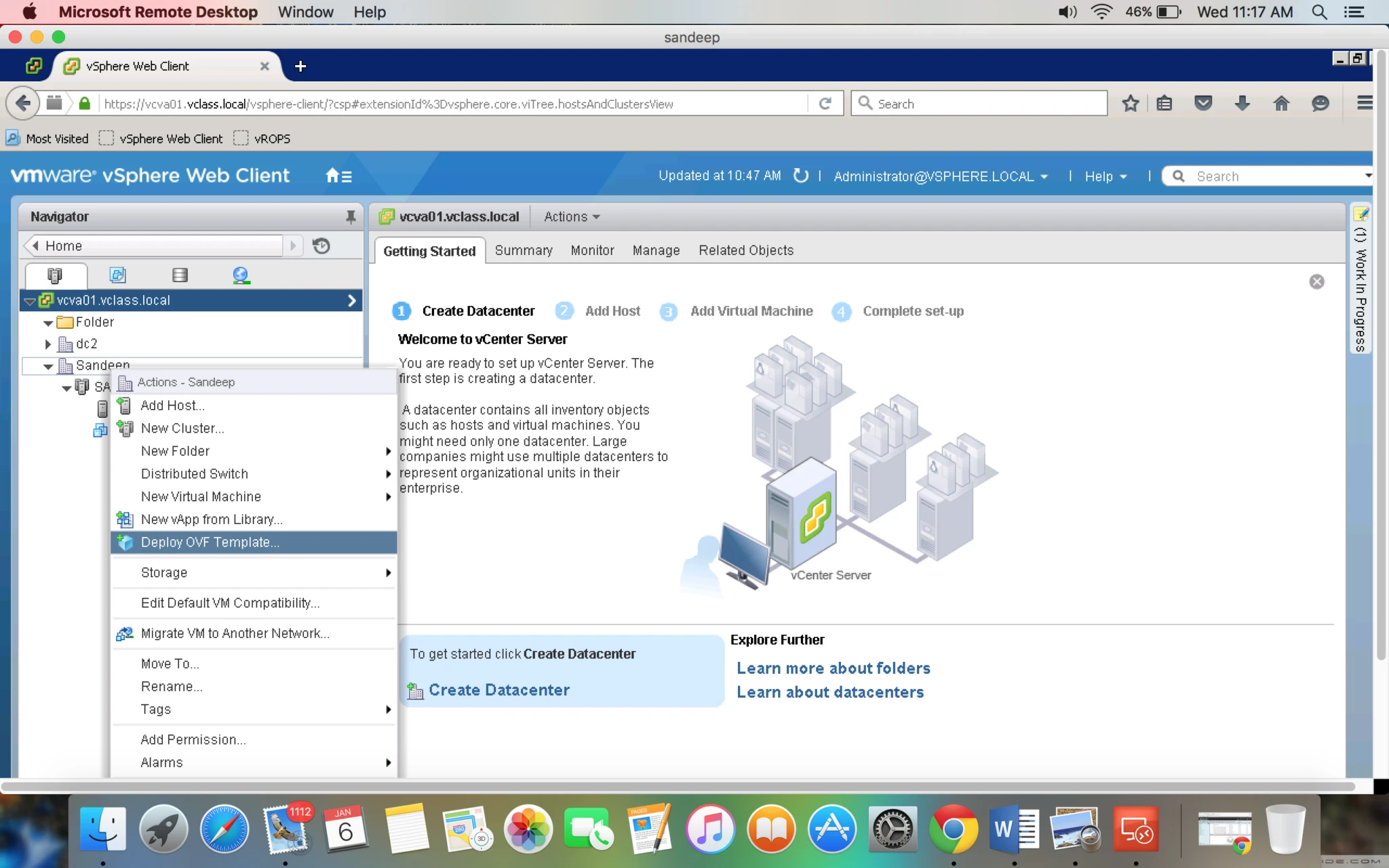
  2. Open vCenter server and right click on Datacenter/Cluster.

dtechinspiration-VDP-installation

3. Before that install Client integration plug-ins after that it will give you option to upload the OVF file.

dtechinspiration-VDP-installation

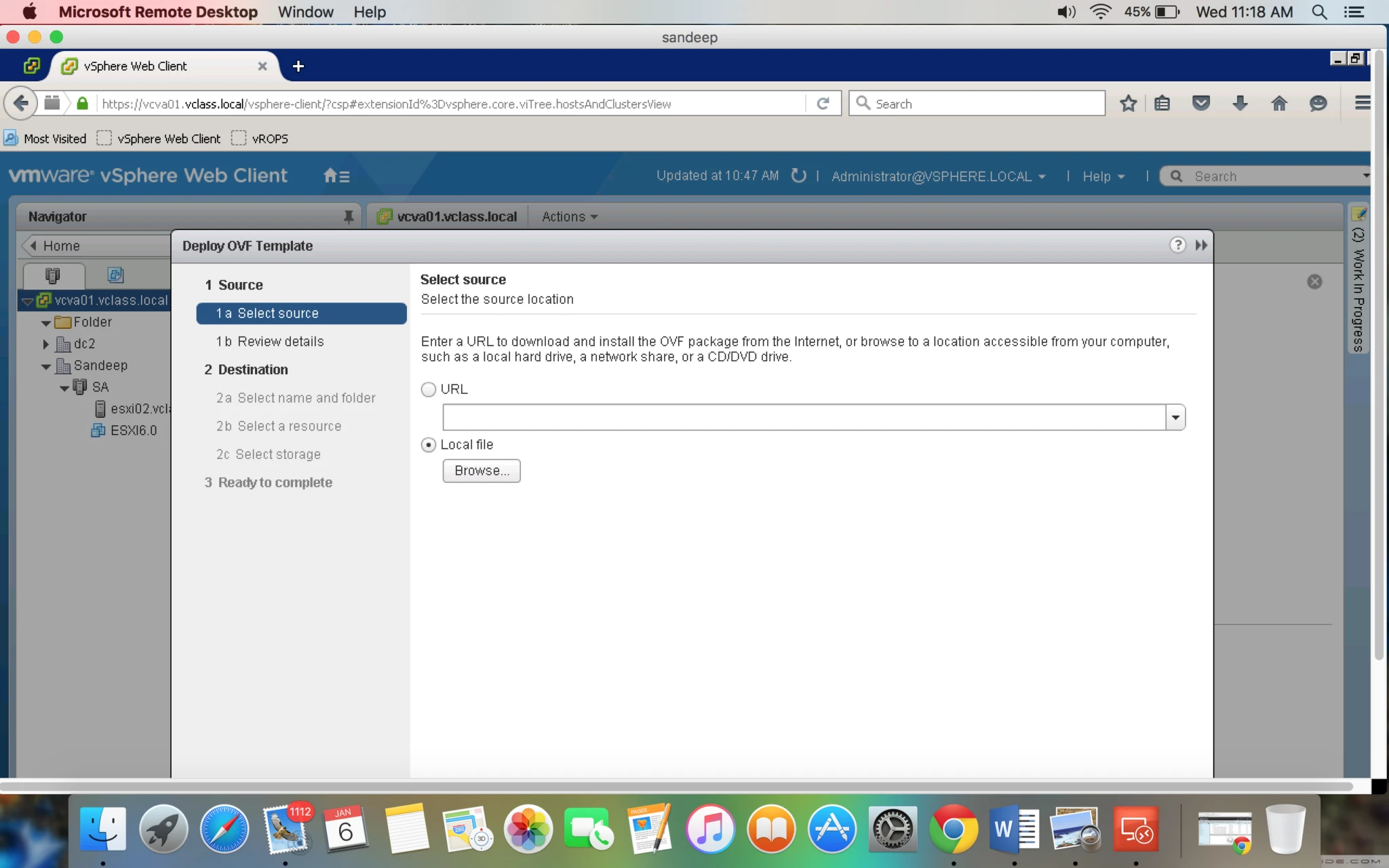
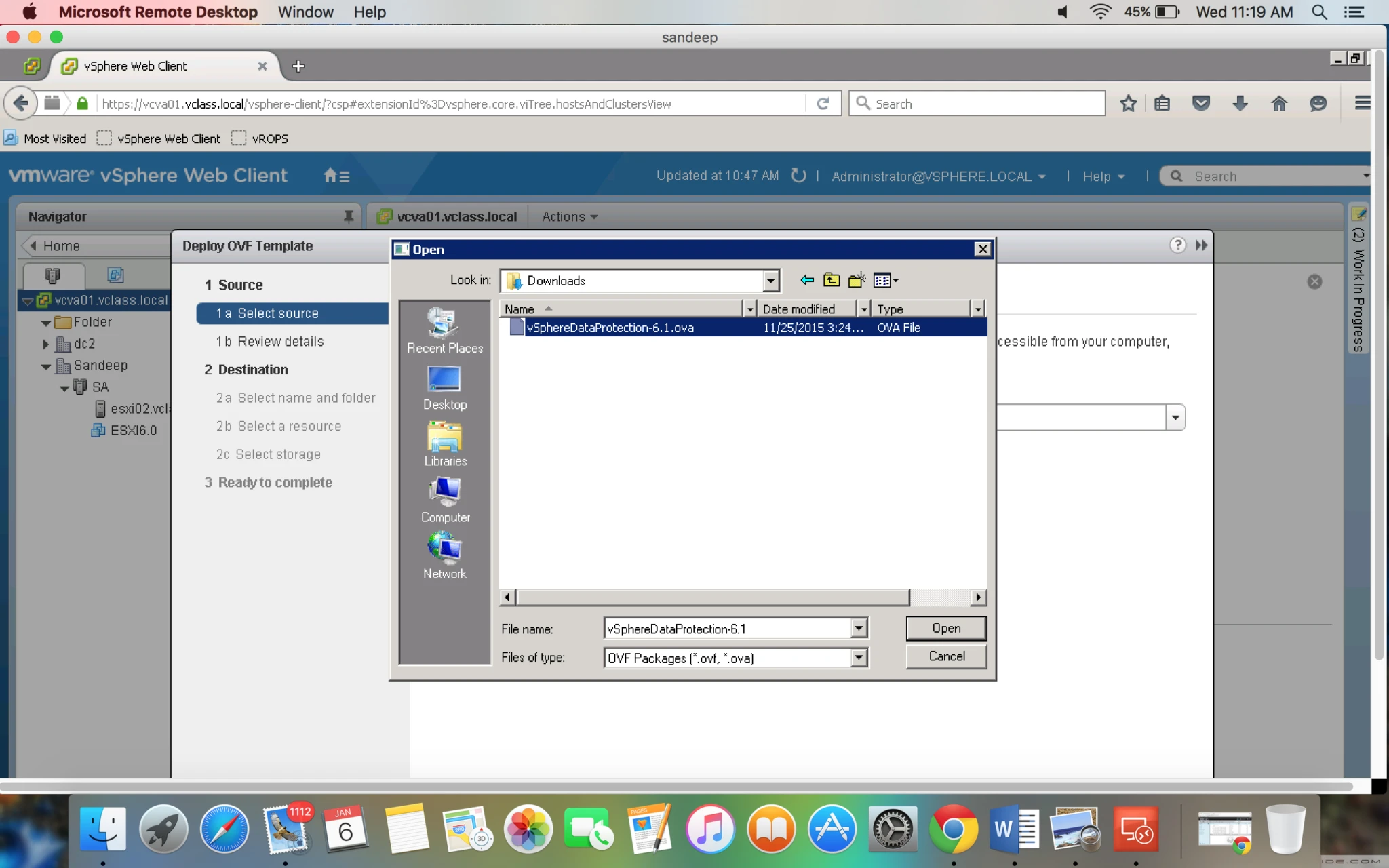
4. From here you can provide .OVF either from URL or from local disk. which is already downloaded.

dtechinspiration-VDP-installation

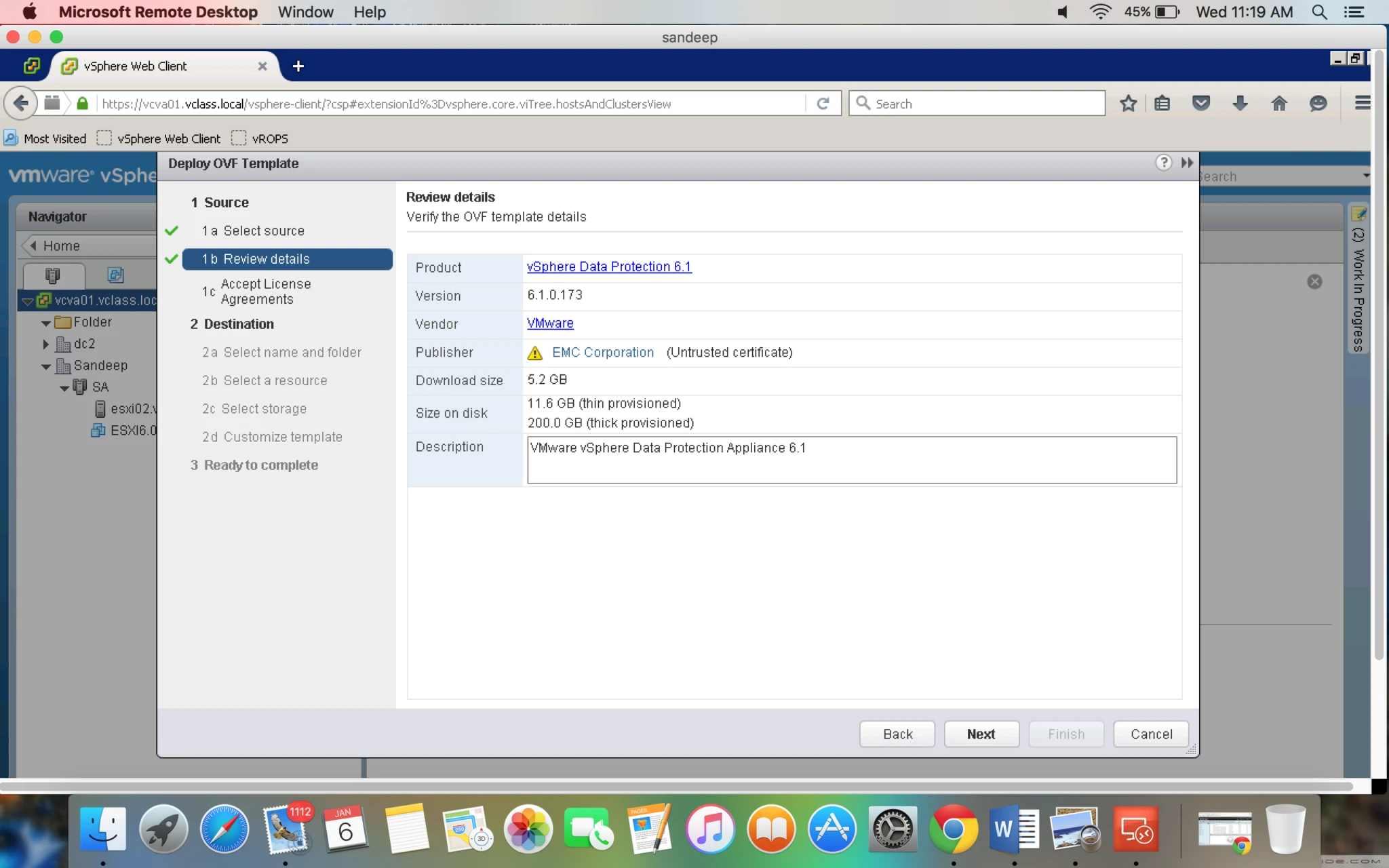
5. It will give you details regarding this .ovf click next.

dtechinspiration-VDP-installation

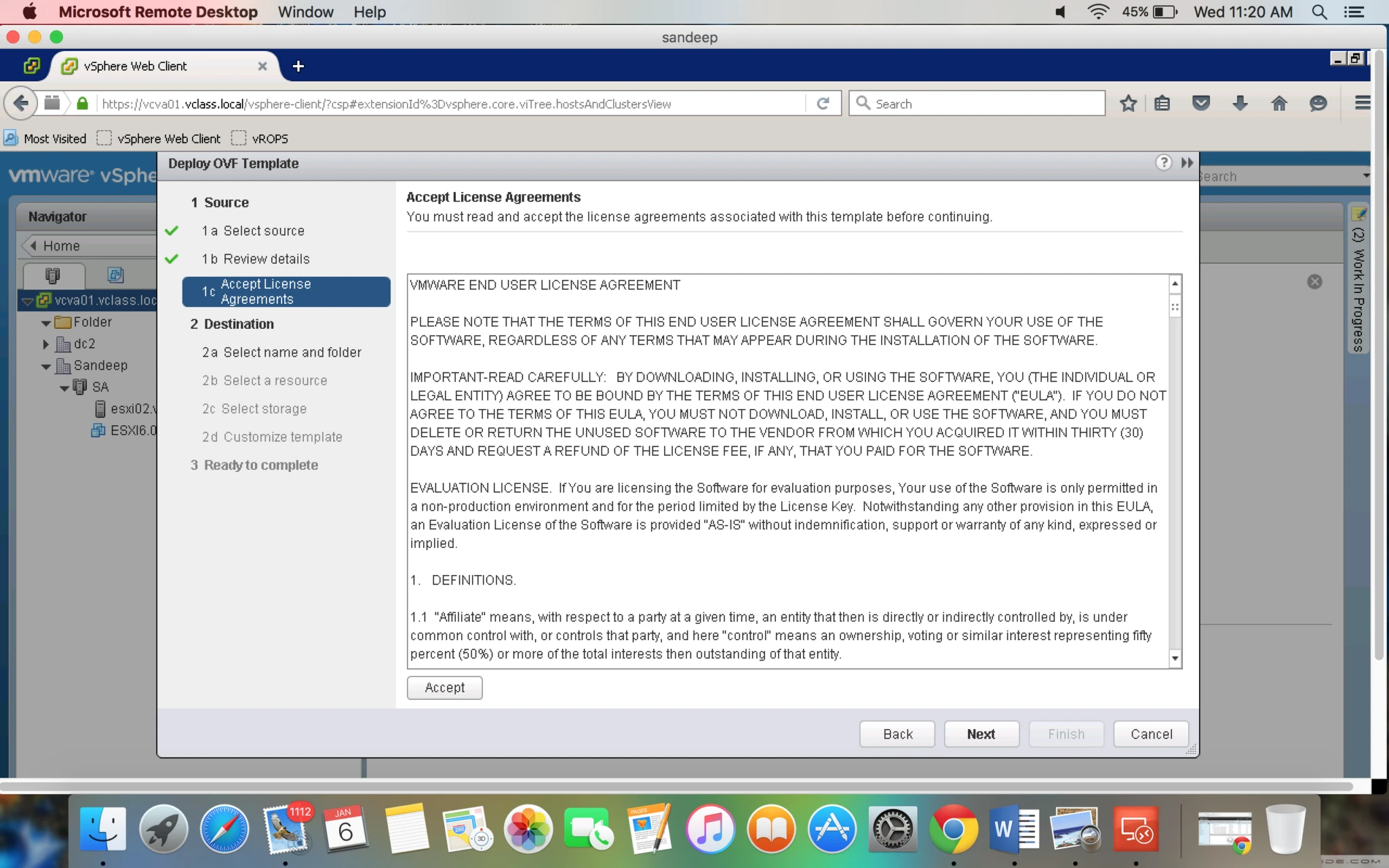
6. Accept EULA click next.

dtechinspiration-VDP-installation

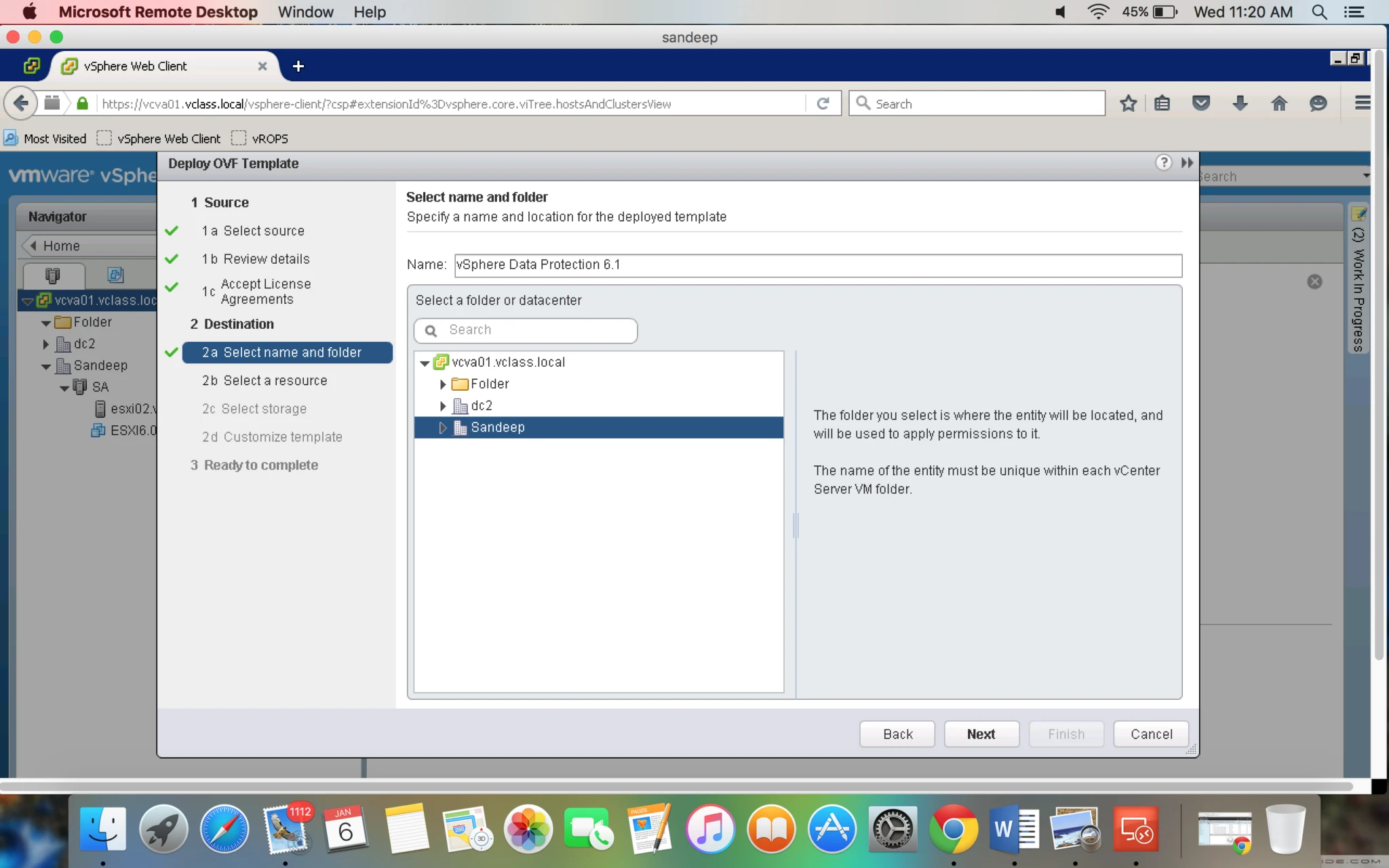
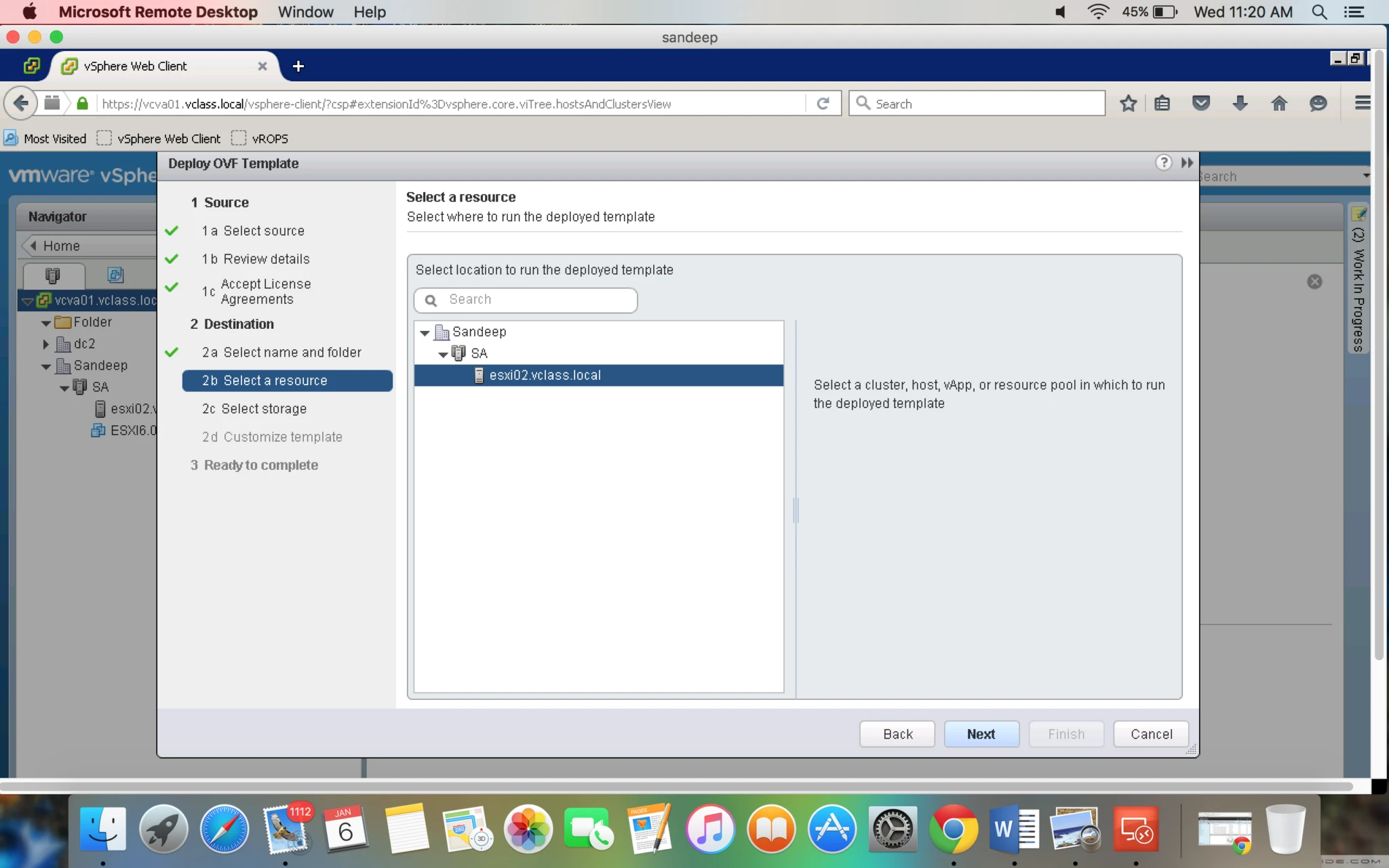
7. Select the Datacenter and ESXi Host.

dtechinspiration-VDP-installation

dtechinspiration-VDP-installation

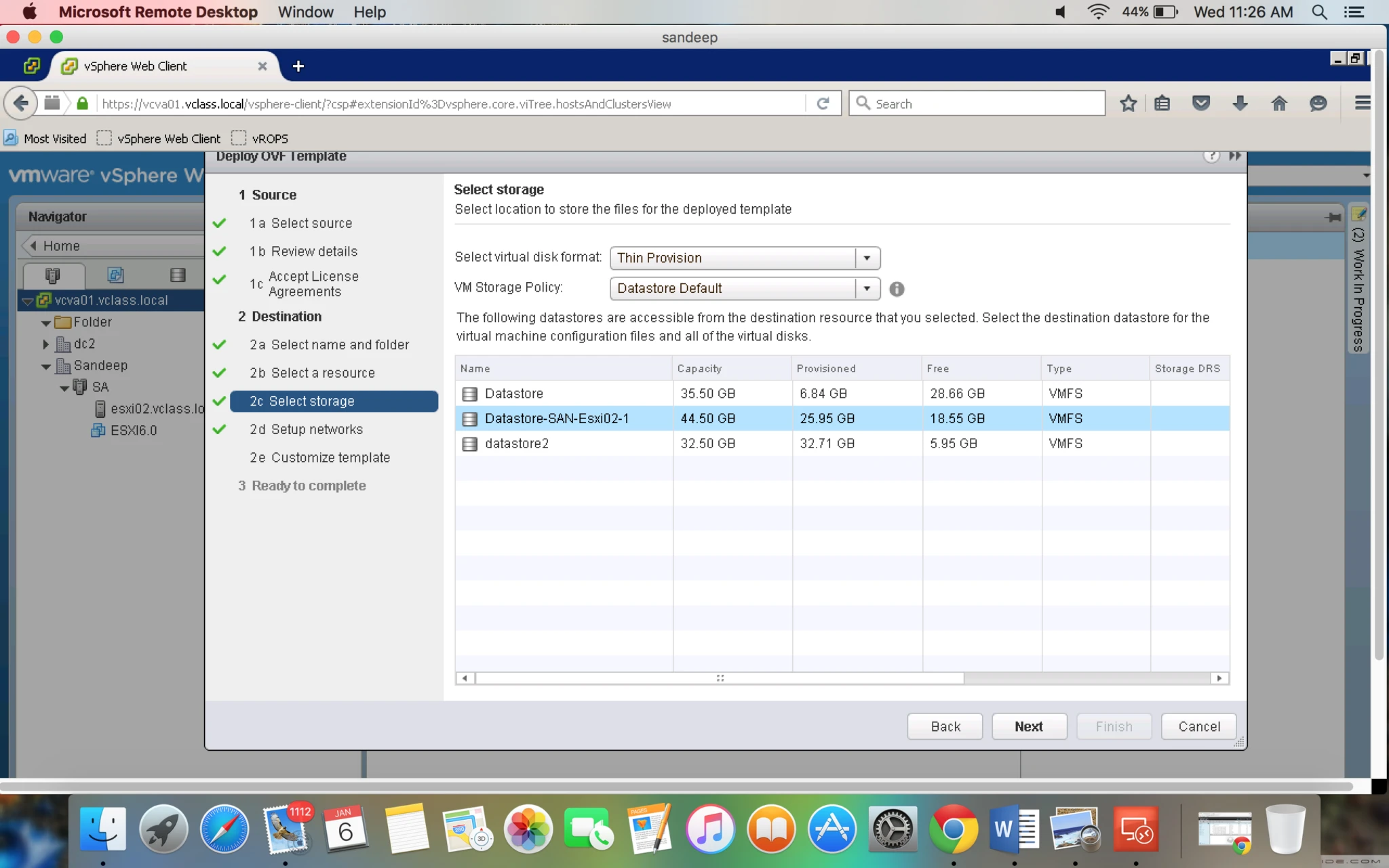
8. Select the Storage where disk will be stored.

dtechinspiration-VDP-installation

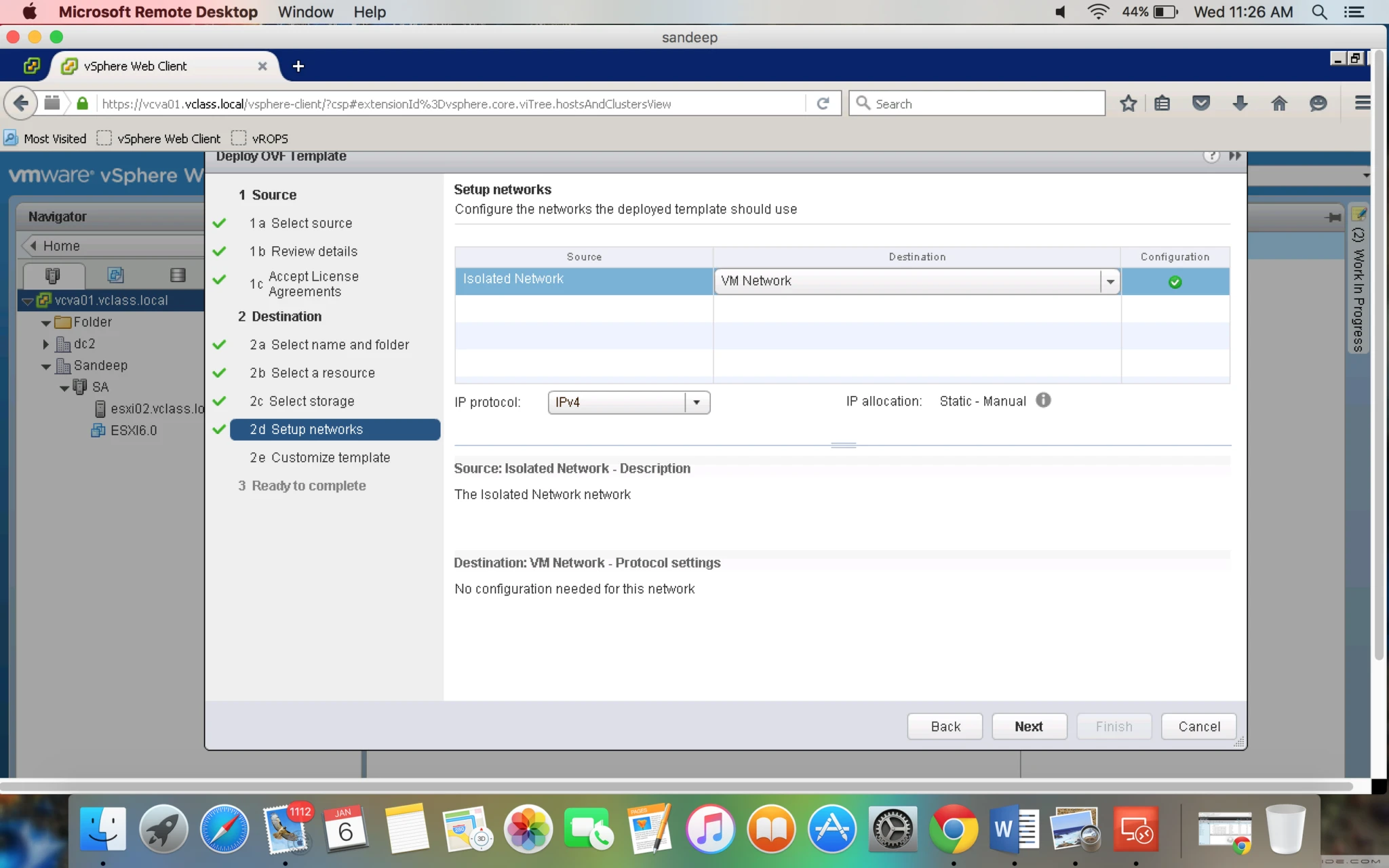
9. Select the Network

dtechinspiration-VDP-installation

dtechinspiration-VDP-installation

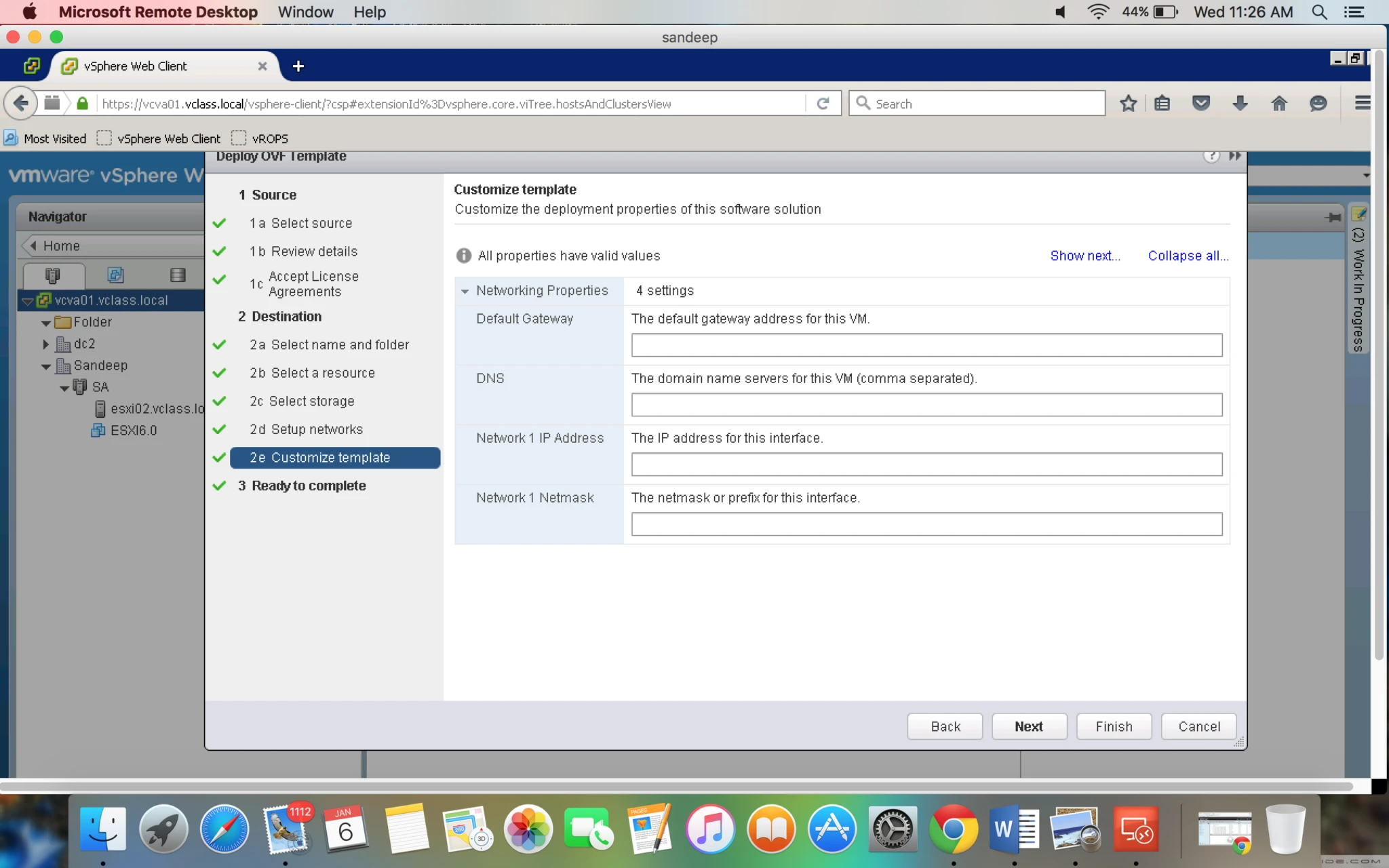
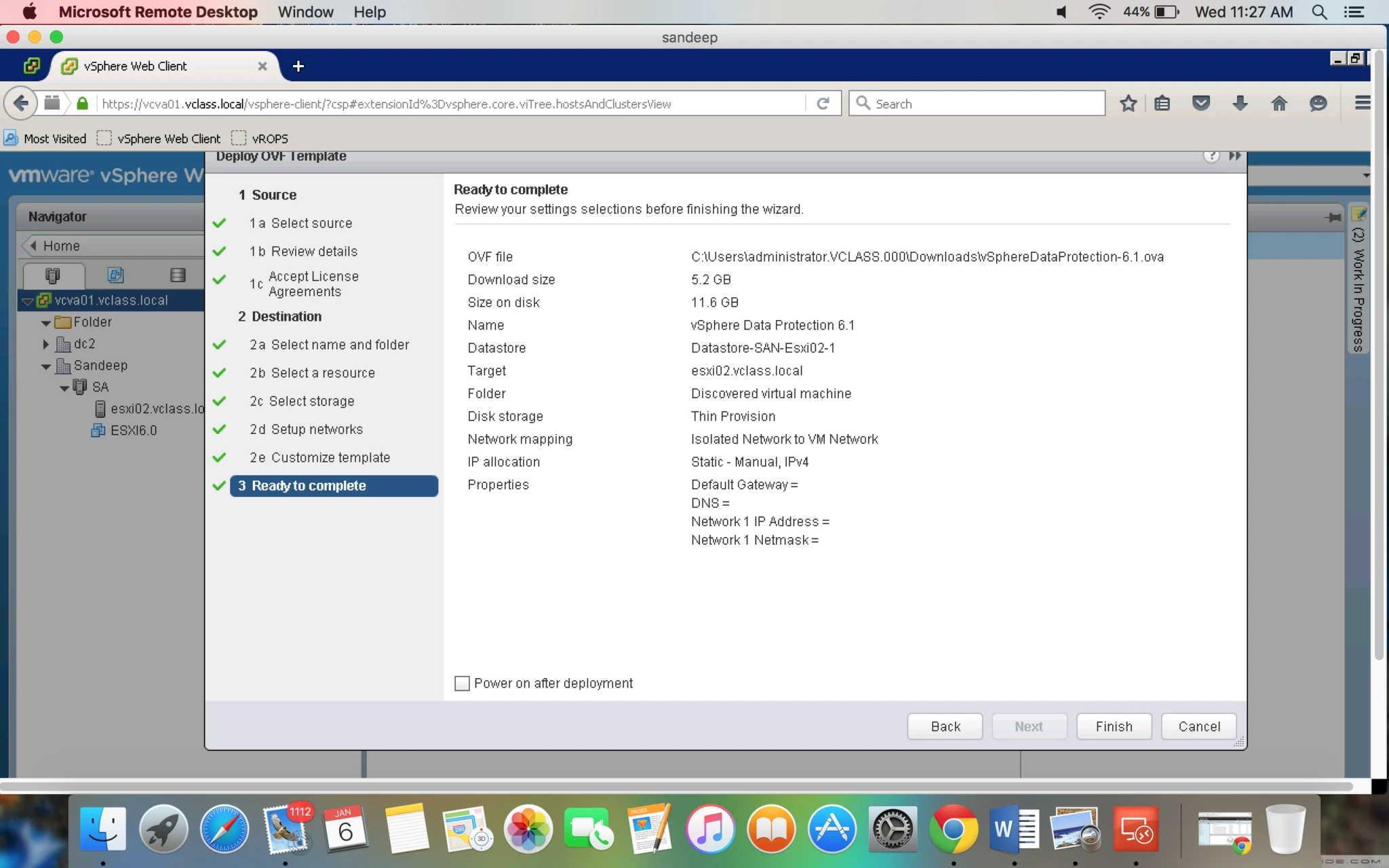
10. This is final page from here you can power on this appliance after deployment.

dtechinspiration-VDP-installation

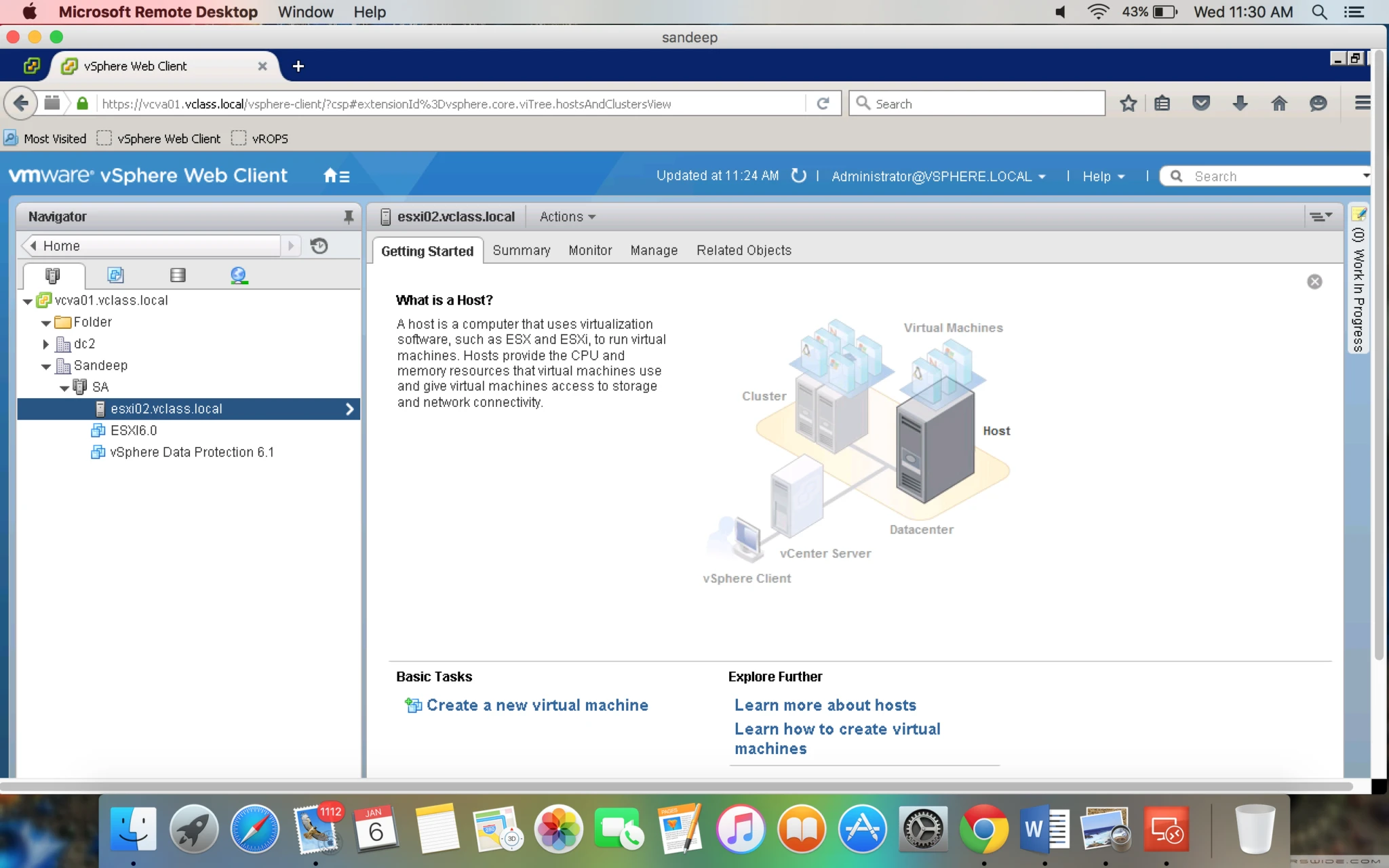
11. After deployment you can see your VM in Webclient.

dtechinspiration-VDP-installation