 by
by Lifecycle Management
vSphere 8 introduces DPU support for vSphere Lifecycle Manager to automatically remediate the ESXi installation on a DPU in lock- step with the host ESXi version. Staging of update/upgrade payloads, parallel remediation and standalone host support combine to bring vLCM up to feature parity with Update Manager. Standalone hosts can be managed using vSphere Lifecycle Manager via
API. VMware Compatibility Guide details what vLCM features a Hardware Support Manager can support.
A technical preview of vSphere Configuration Profiles introduces the next generation of cluster configuration management as a future replacement of Host Profiles.
Deprecation Awareness
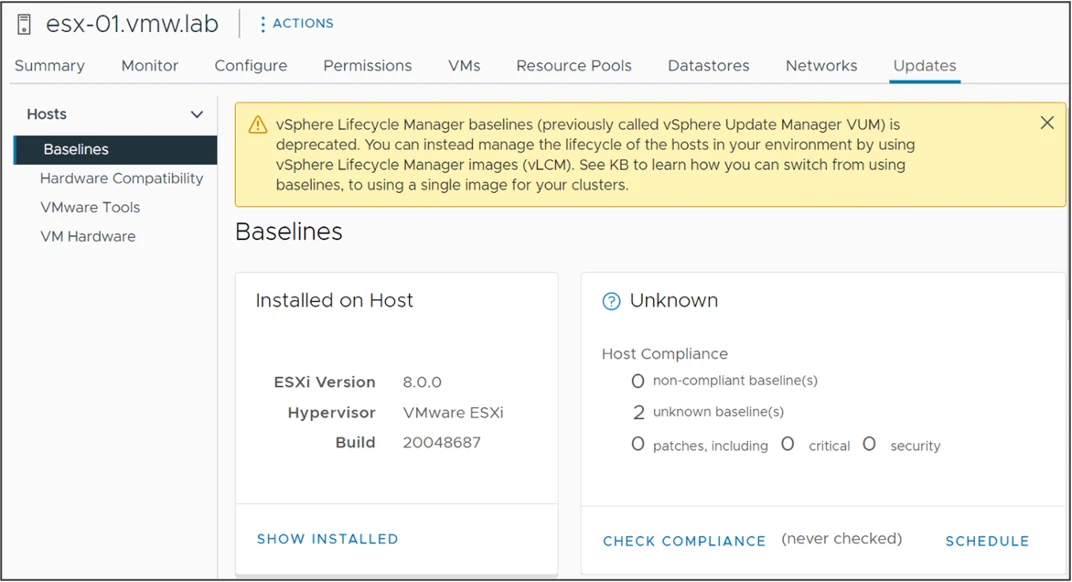
Baseline lifecycle management, previously known as vSphere Update Manager, is deprecated in vSphere 8. This means that baseline lifecycle management is still supported in vSphere 8, but that vSphere 8 will be the last release that supports baseline lifecycle management.
Stage Cluster Image Updates to Speed Up Remediation
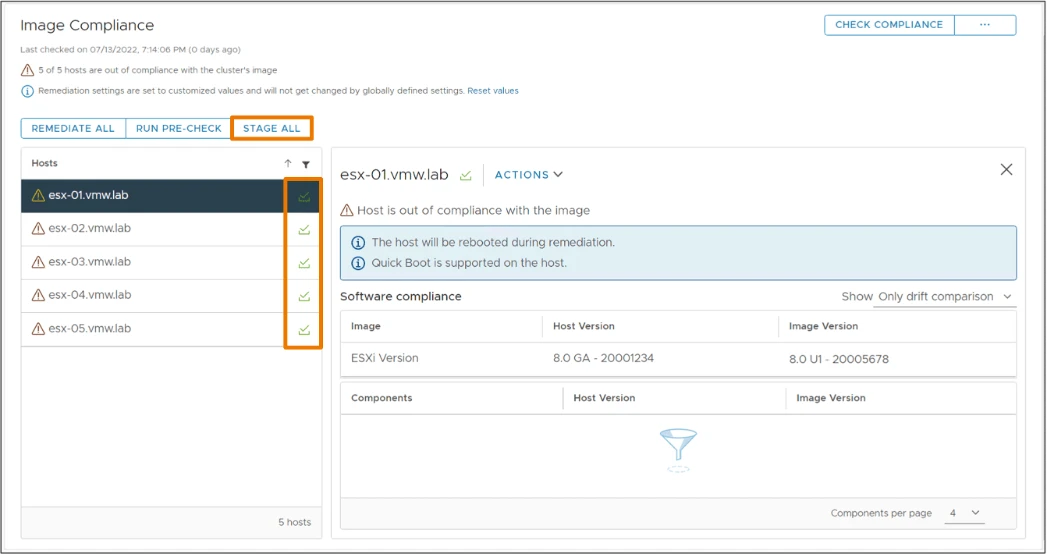
vSphere Lifecycle Manager can stage update payloads to the hosts in advance of remediation. Staging can be performed without maintenance mode. This reduces the time needed for the hosts to spend in maintenance mode. Firmware payloads can also be staged with integration from a supported Hardware Support Manager.
Quicker Cluster Remediation
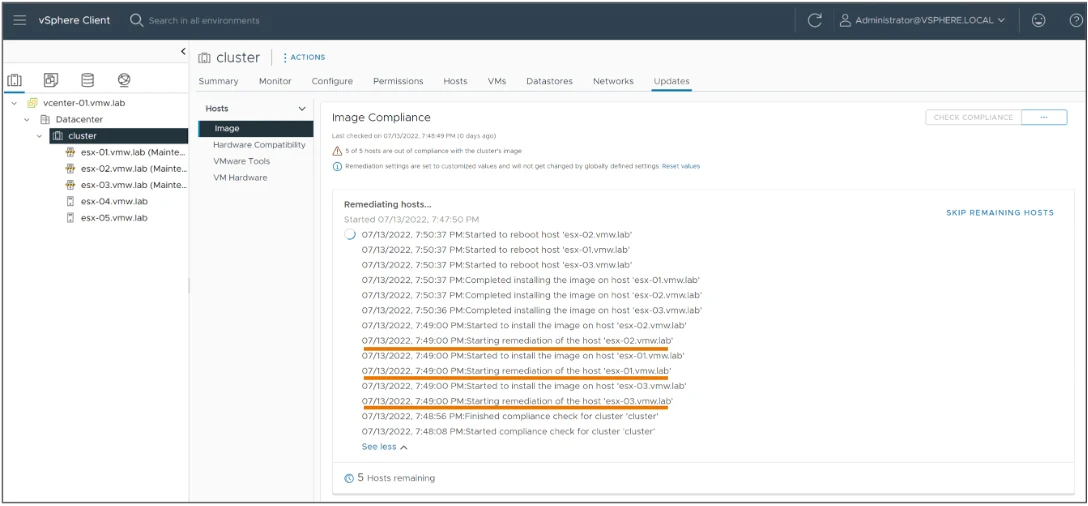
vSphere Lifecycle Manager can remediate multiple hosts in parallel, dramatically reducing the overall time needed to remediate an entire cluster. Hosts placed into maintenance mode can be remediated in parallel. A vSphere administrator can choose to remediate all hosts in maintenance mode or define the number of parallel remediations to perform at a given time. Hosts not placed into maintenance mode are not remediated during this lifecycle operation.
Configuration Management at Scale
vSphere 8 introduces a technical preview of vSphere Configuration Profiles, the next generation of cluster configuration management.
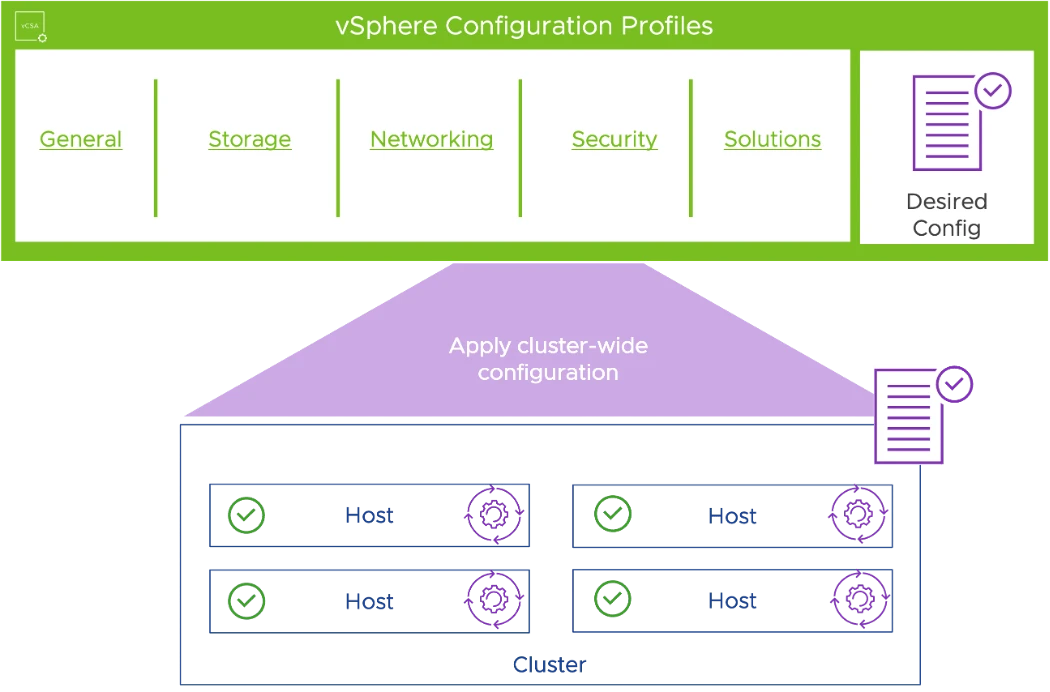
Desired configuration is defined at the cluster object and applied to all hosts in the cluster. All hosts in the cluster have a consistent configuration applied. Configuration drift is monitored for and notified about. A vSphere Administrator can remediate the configuration drift.
vSphere Configuration Profiles is still under active development and future releases of vSphere 8 will expand and enhance its support. Host Profiles continue to be supported in vSphere 8.
Enhanced Recovery of vCenter
vCenter reconciles cluster state after a restore from backup. ESXi hosts in a cluster contain a distributed key-value store of cluster state.
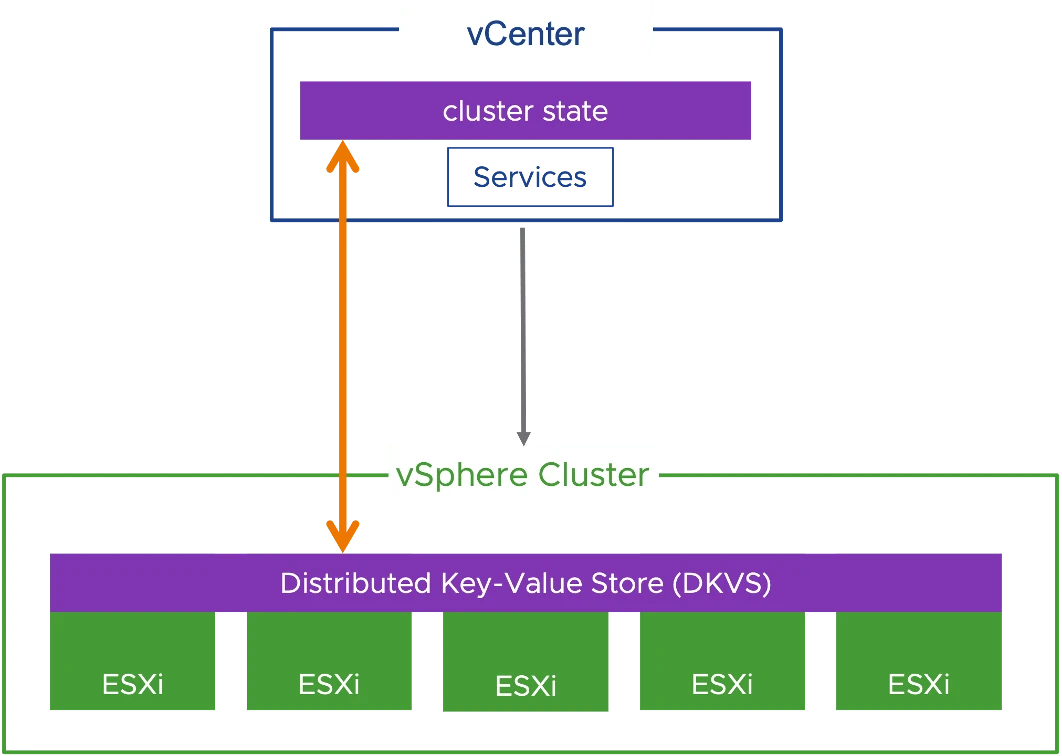
The distributed key-value store is the truth source for the cluster’s state. If vCenter is restored from a backup, it will reconcile the cluster state and configuration with the distributed key-value store. In vSphere 8 GA, host-cluster membership is reconciled with additional configuration and state planned for support in future releases.
Credit: VMware.com
Leave a Reply